Description
Merits of the Onkyo TX-NR7100
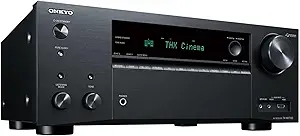
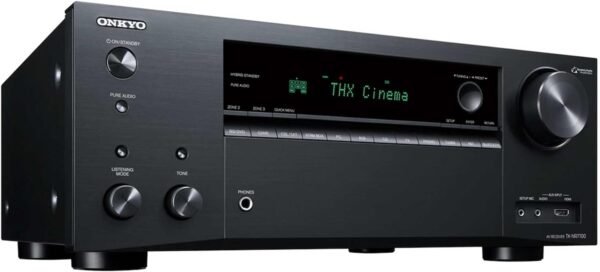
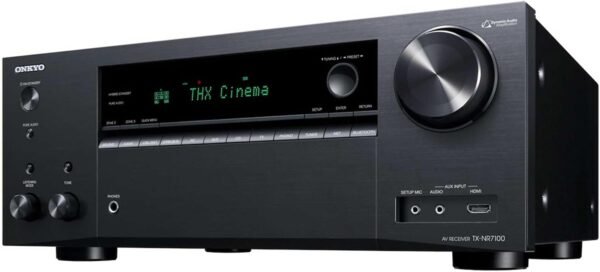
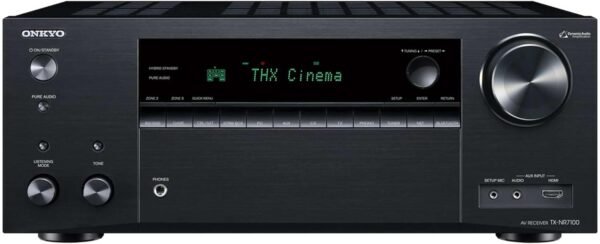
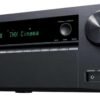
Testing out the Onkyo TX-NR7100 9.2-Channel AV Receiver has been an experience that I can best describe as a game-changer for home entertainment. The Dirac Live Room Correction feature is a standout here, automatically calibrating sound in my living room with incredible precision. I used the included wired mic for calibration, and the difference in audio clarity and bass depth was immediately noticeable—dialogue became crisper, and the soundstage felt more immersive. This feature alone makes it a worthy choice for anyone who values high-quality audio.
The Dolby Atmos compatibility, combined with DTS:X, takes movie nights to another level. I don’t have a full surround setup, but the Dolby Atmos Height Virtualizer did an amazing job simulating height effects, creating an enveloping audio experience even with traditional speaker layouts. It’s like the sound was wrapping around me. The uncompressed HDMI 8K/4K transfer at 40 Gbps ensures stunning video quality to match the audio, and trust me, your eyes will appreciate it as much as your ears.
Ease of Connectivity and Multi-Zone Entertainment
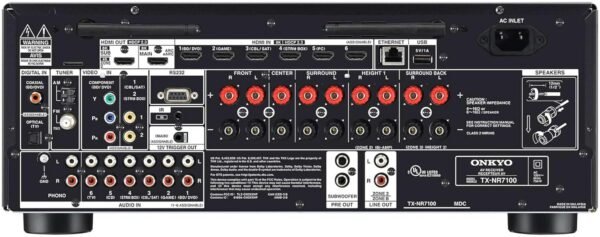
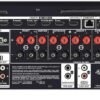
Setting up the receiver was surprisingly straightforward, even for someone like me who dreads overly technical setups. It supports three HDMI-out options, which means you can run multiple entertainment setups simultaneously. I tested this by streaming a movie in the living room while my kids watched cartoons in another room, thanks to the discrete zone 2 HDMI switching. It handled these tasks effortlessly.
Another feature I loved was how seamlessly it integrates with the Sonos ecosystem. I paired it with a Sonos Port, and it worked flawlessly, waking up and syncing perfectly with the Sonos app. The Sonos Volume-Pass Through ensured I could control the volume directly from the app, which was very handy.
Streaming music was also a breeze. With access to platforms like Spotify, TIDAL, and Pandora, I had all my favorite tunes at my fingertips. The bi-directional Bluetooth was a neat touch too. I streamed music from my phone to the receiver, and in another instance, I sent audio from the receiver to my wireless headphones—both worked without a hitch.
Perfect for Gamers
As someone who occasionally enjoys gaming, I can’t ignore how this receiver caters to gamers with its HDMI 2.1 enhancements. The 4K/120Hz HDR pass-through provided ultra-smooth visuals, and features like VRR (Variable Refresh Rate) and ALLM (Auto Low Latency Mode) ensured there was no lag or stutter. I tested it with a fast-paced racing game, and the experience was buttery smooth—no screen tearing, no delays, just pure gaming bliss. If gaming is your thing, this receiver is worth considering.
Favorable Attributes
- Dirac Live Room Correction significantly enhances audio clarity and balance.
- Dolby Atmos and DTS:X deliver an immersive, cinema-like sound experience.
- 8K/4K uncompressed HDMI transfer ensures high-fidelity video quality.
- Multi-zone capability allows simultaneous entertainment setups.
- Seamless integration with Sonos makes it a versatile choice for smart homes.
- Advanced gaming features like VRR and ALLM cater to gamers perfectly.
Areas for Improvement
Despite its impressive performance, there are a few aspects that could have been better.
- The user interface feels outdated compared to the competition; navigating menus wasn’t as intuitive as I’d hoped.
- Dirac Live calibration requires additional equipment (a third-party USB mic) for the most accurate results, which isn’t included.
- At 27.6 pounds, it’s a bulky device that may not be suitable for all setups.
- Firmware updates can be slow, and the process occasionally required restarting the device.
Competing Products
Looking at other devices in the market, the Denon AVR-X3700H and Yamaha RX-A6A come to mind as strong rivals. The Denon offers a more user-friendly interface and similar audio performance but lacks Dirac Live Room Correction, which is a significant edge for the Onkyo. Yamaha’s model, while feature-rich, feels pricier for what it offers. In terms of Dolby Atmos performance, the Onkyo holds its own, delivering comparable immersion while being more budget-friendly.
Where the Onkyo excels is its flexibility in multi-zone audio and seamless Sonos integration, features that not all competitors can replicate. However, if you prioritize ease of use or more modern software interfaces, you might lean towards the Denon.
Cost Effectiveness
Given its features, the price-to-quality ratio of this receiver is excellent. It offers high-end features like 8K HDMI, Dolby Atmos, and Dirac Live Room Correction at a price point that’s competitive in its category. While some might balk at the additional cost of extra calibration gear, I found the overall package to be a smart investment for anyone serious about home entertainment. It’s not the cheapest receiver on the market, but it delivers premium performance without hitting the exorbitant price tags of some competitors.
This receiver is a solid choice for audiophiles, movie lovers, and gamers who want a versatile and powerful addition to their home theater setup. Its ability to enhance both audio and video quality while offering advanced connectivity options sets it apart.
0 views